
Rug size: what size rug for a living room
Rug size is the one measurement that changes a room more than anything else on the floor, and it is the one people rush. A rug slightly too small makes the whole space look worse than if you had left the boards bare.
This is what to measure, in what order, and what each number should look like once the rug is down.
Measure the furniture first, not the room
The most common mistake is measuring the space and then shopping for that size. A rug is sized to the furniture sitting on it, and the room is almost always bigger than the arrangement you want.
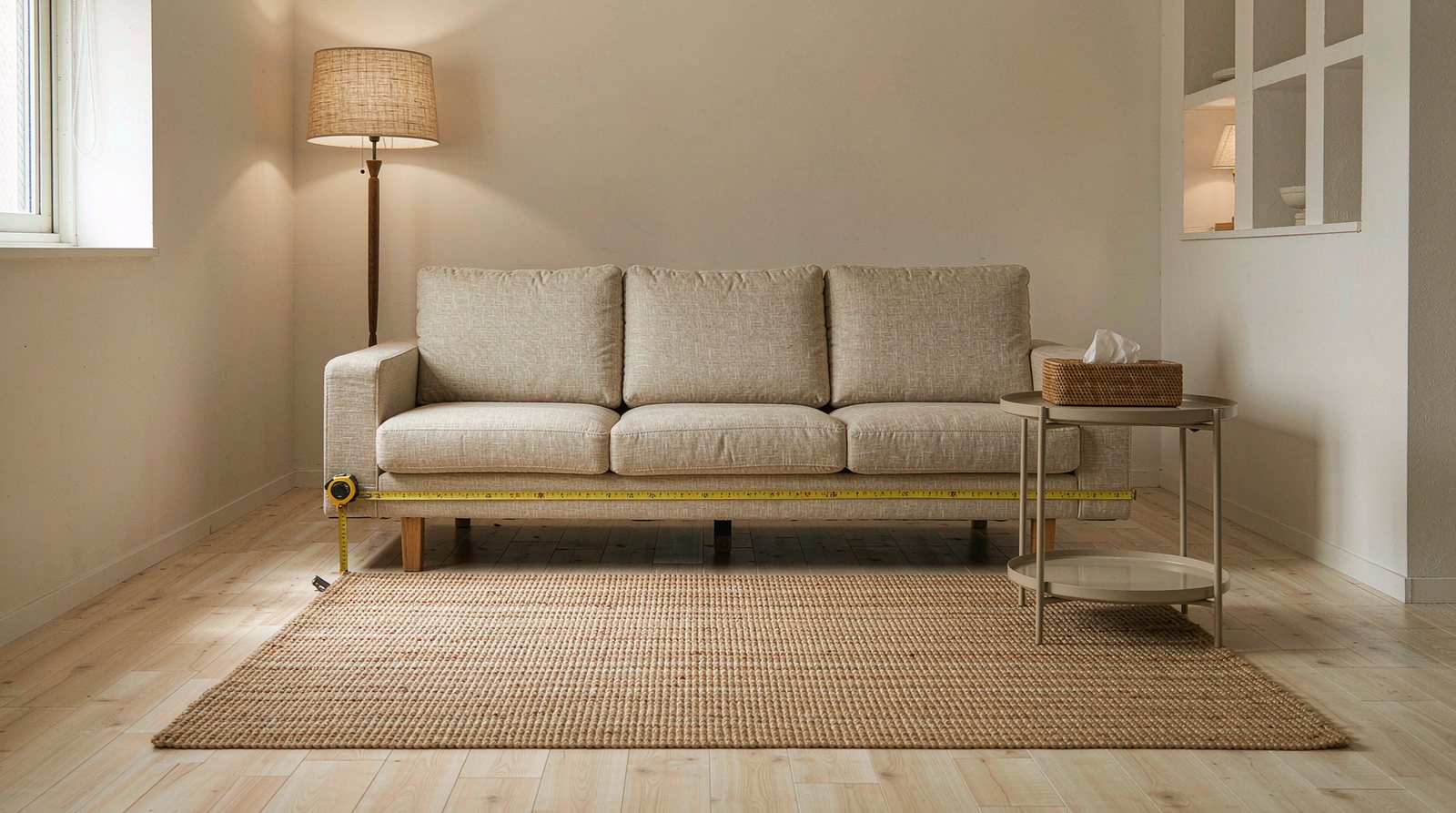
Start with the sofa. Measure its width, front to back at the seat, and add twelve inches on each side. That is the smallest rug that works, and anything smaller leaves the front legs hanging off.
Then measure the room, but treat it as a maximum rather than a target. If your correctly sized rug comes to eleven by eight and the room is fourteen by ten, leave the bare floor showing. That space is what makes the rug look deliberate.
The front legs rule
This is the one measurement that matters more than any other. At least the front legs of the sofa and the front legs of every chair should rest on the rug. All four feet of the coffee table should be on it too.
The back legs can hang off, and usually should. It looks counterintuitive because the front is the side you see, but a rug tucked entirely under a sofa reads as a small rug shoved behind a sofa rather than as part of the room. The back legs off the edge is what makes the sofa sit on the rug rather than beside it.
Living room sizes that work
For a standard three-seat sofa around seven feet wide, you want eight by ten at the small end. If the sofa is an eight-foot sectional, go ten by twelve. Anything smaller and the front legs will not reach.
In a small room, the “float everything” arrangement looks tidier than a rug too big to walk around. Push the front legs of every seat onto one smaller rug, and let the backs hang off. It solves the same problem in half the floor space.
Bedrooms and dining rooms
Under a bed, the rule is different because nobody ever sees it. Two-thirds of the bed on the rug, or a rug wide enough to stick out either side, is enough. Buying the same rug you would put at the foot of the bed is usually money spent where no one looks.
For a dining table, every chair should sit fully on the rug when pulled out, which means adding eighteen inches to the length on each side. That sounds excessive until you remember how it looks when someone sits down at the head of the table and their chair is on bare floor.
A round table is the exception that rewards being generous. A round rug under a round table reads better at a size where there is a consistent ring of floor showing around both, rather than trying to square off a circle.
When you have almost no floor to work with
Some rooms do not have room for a rug sized to the furniture. In a narrow flat, a rug two feet smaller than ideal still works if it goes fully under the front half of the sofa and past the front legs of one chair. Partial coverage reads as deliberate, while a rug floating in the middle of a small floor reads as an accident.
Above all, take the tape to the shop or measure the room online before you order. Rug sizes get returned more often than almost any other large purchase, and a rug that does not fit is hard to live with while it waits to go back.
What to look for once the size is right
Colour matters less than people expect because the rug sits under everything. What changes a room is tone and pile. A pale rug under a dark sofa lifts the whole space, and the same rug under a pale sofa makes the room feel flatter and smaller.
Low pile is worth choosing in a small flat if you have ever had to clean under a sofa. A thick rug is harder to get clean, harder to shift, and its edge becomes a trip hazard where it lifts. If you want texture, get it from the pattern rather than the height.
Jute and seagrass are the two renter-friendly options worth knowing about. Both are hard wearing, both are cheap relative to wool, and both come apart at the edges with wear rather than fraying. The catch is that jute sheds for the first few months and does not tolerate a spill, so treat it as a look rather than a solution if anyone in the house spills things.
Fixing the size is the part that costs nothing and does the most. If you get that right and the colour is wrong, you can live with it. If the size is wrong, nothing else on the floor will rescue it. The deposit guide covers the rest of what goes wrong in a rental, and this is the single change that makes the most difference to how a room looks for the least money.