
How to decorate a rental without losing your deposit
Most decorating advice assumes you own the place. Paint the wall a colour, drill in some shelves, hang a gallery wall wherever it looks right. Every one of those steps leaves a mark, and when the tenancy ends the mark comes off your deposit.
This is the order of operations for a rental that still looks good at the end. Work through it before you buy anything, because the answers change what is worth buying.
What actually gets money taken off a deposit
In most tenancy agreements the landlord can deduct for damage beyond fair wear and tear, and for anything left behind. In practice that comes down to four things, and only one of them is really about damage.
- Holes in the wall, filled badly. Picture hooks, shelf brackets, and the screw holes left behind after removing them.
- Adhesive residue or a peeled patch of paint. This is the one that catches people out, because it counts as damage even when the paint underneath is fine.
- Damage to doors, skirting boards, and window frames, usually from moving furniture or from something hung over a radiator.
- Anything you leave behind that you were supposed to take with you.
Notice what is not on that list. Scuffed floors, a slightly faded patch of carpet, and small marks near a door are ordinary wear. A landlord cannot reasonably charge for a flat that has been lived in.
Before you start: get the wall type
Almost every method below depends on what your walls are made of, and this is the step people skip. Find out once and the rest of the decisions get easy.
Press a finger firmly into a patch of wall in an out-of-the-way spot. If a layer comes away, you have wallpaper over plaster. If you leave a small dent that brushes out, you have plasterboard. If the surface is hard and slightly shiny, it is painted masonry. Feel it near a light switch too, since that is often a different build.
Paint on masonry is forgiving. Plasterboard is not, because the paper layer tears if you pull anything off too eagerly. Old wallpaper with vinyl on top is the worst case, because adhesive bonds to the vinyl and takes the whole sheet with it.
Hanging things without holes
Adhesive hooks are the obvious answer and they work well, within limits. The ones rated for a few pounds, used on a painted masonry wall, come down cleanly most of the time. The failure is when you use them on plasterboard, or leave them up for months in direct sun, or hang something that swings.
Two habits make a difference. Stick the hook on, wait the full cure time on the packet before loading it, and when you take it down peel it slowly at a low angle rather than straight back. Rushing the removal is what pulls paint.
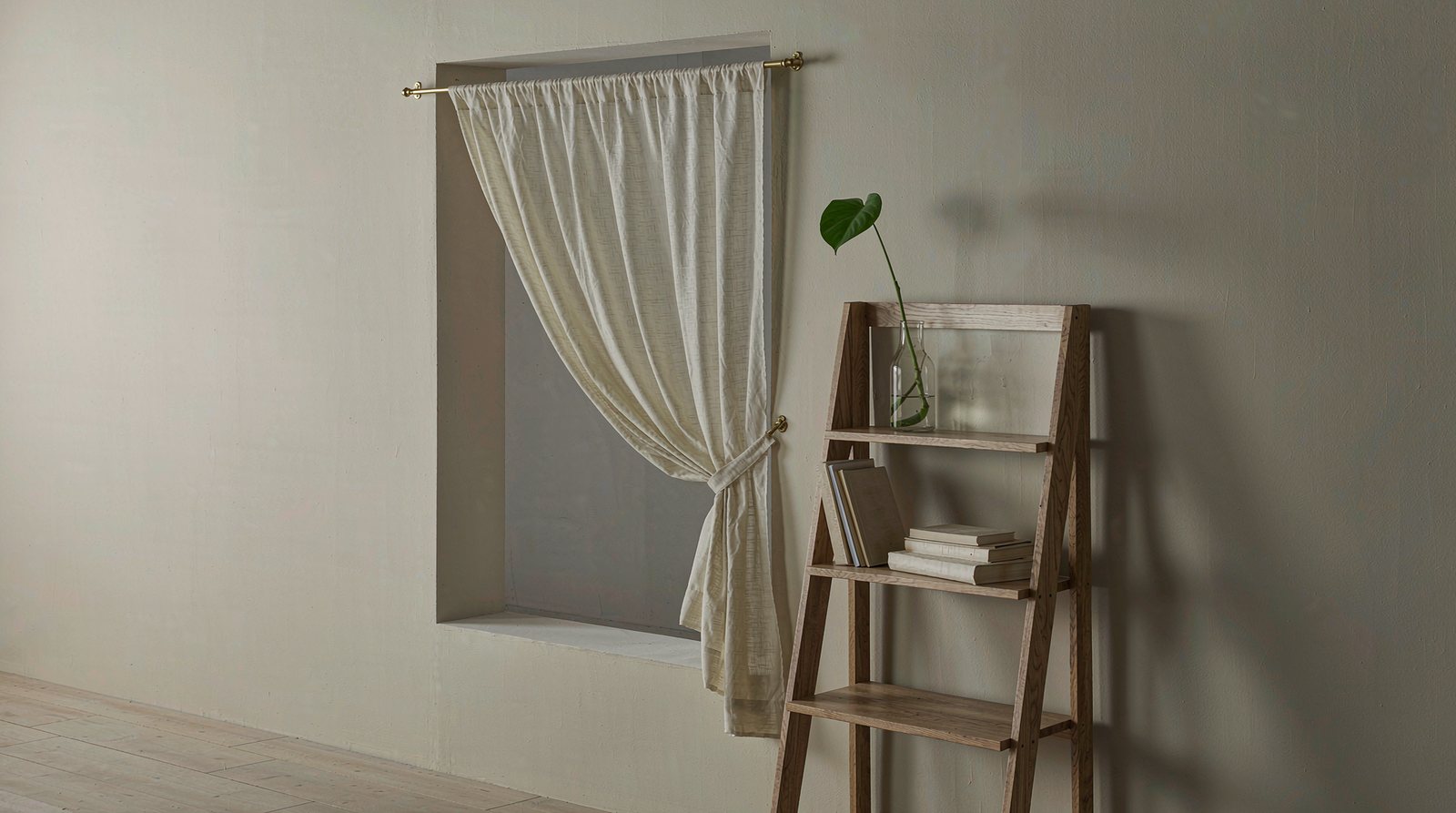
For heavier frames, skip the wall and lean. A floor-standing ladder shelf or a leaning frame against the wall does the same job, takes no adhesive, and can move with you. It looks deliberate rather than temporary, which is the whole point.
Curtains without a drilled bracket
A tension rod mounted inside the window recess is the single most useful thing in a rental. It needs no holes, it can be repositioned when you move, and it takes proper curtains rather than a cafe pole.
Fit it in the recess if there is room, not across the glass, so the curtains open flat. Check the depth first: most standard rods need at least half an inch of clearance, and a deep sill eats that. If the recess is too shallow, a no-drill bracket that clamps to the window frame is the next best option.
Hang them high. Whatever the ceiling height, put the rod six inches above the window frame and drop the curtains to the floor. A short curtain sitting on a high sill makes a room look smaller and cheaper, and it is the single most common thing to get wrong.
When adhesive is a bad idea
Some things should not go anywhere near a rental wall. Peel-and-stick wallpaper in a bathroom, where humidity gets into the adhesive and softens the bond, then fails all at once and takes the top layer of paint with it. Command strips holding anything heavy over a bed. Any adhesive on a wall you have not identified yet.
Plasterboard is the other one. Adhesive hooks rated for ten pounds will still tear the paper layer, and a repair patch on plasterboard is obvious from the wrong side of the room. On plasterboard, leaning or freestanding is the honest answer.
A ten minute end of tenancy checklist
- Fill every hole, then sand flush and touch in with the same paint. Check under where furniture used to sit, since those spots are easy to miss.
- Remove every hook slowly, at a low angle, and deal with any residue immediately.
- Take down anything hanging on a radiator or covering a socket.
- Hoover, including behind the sofa and in the corners of the rooms people actually look at.
- Photograph every wall, floor and fitting before you hand back the keys, while you still have the chance.
That last one is worth doing properly. Most end-of-tenancy disputes are a disagreement about what was there when you arrived, and dated photographs settle it faster than an argument will.
What to do first if you only have an afternoon
Fit a tension rod, add two lamps at different heights, and put down a rug in front of the sofa. Those three change how a room reads more than anything else you can do without touching the walls, and all three are reversible in a way that a painted wall is not. Get the measurements right while you are at it, because the rug is the one that has to be the correct size or it makes everything else look worse.