
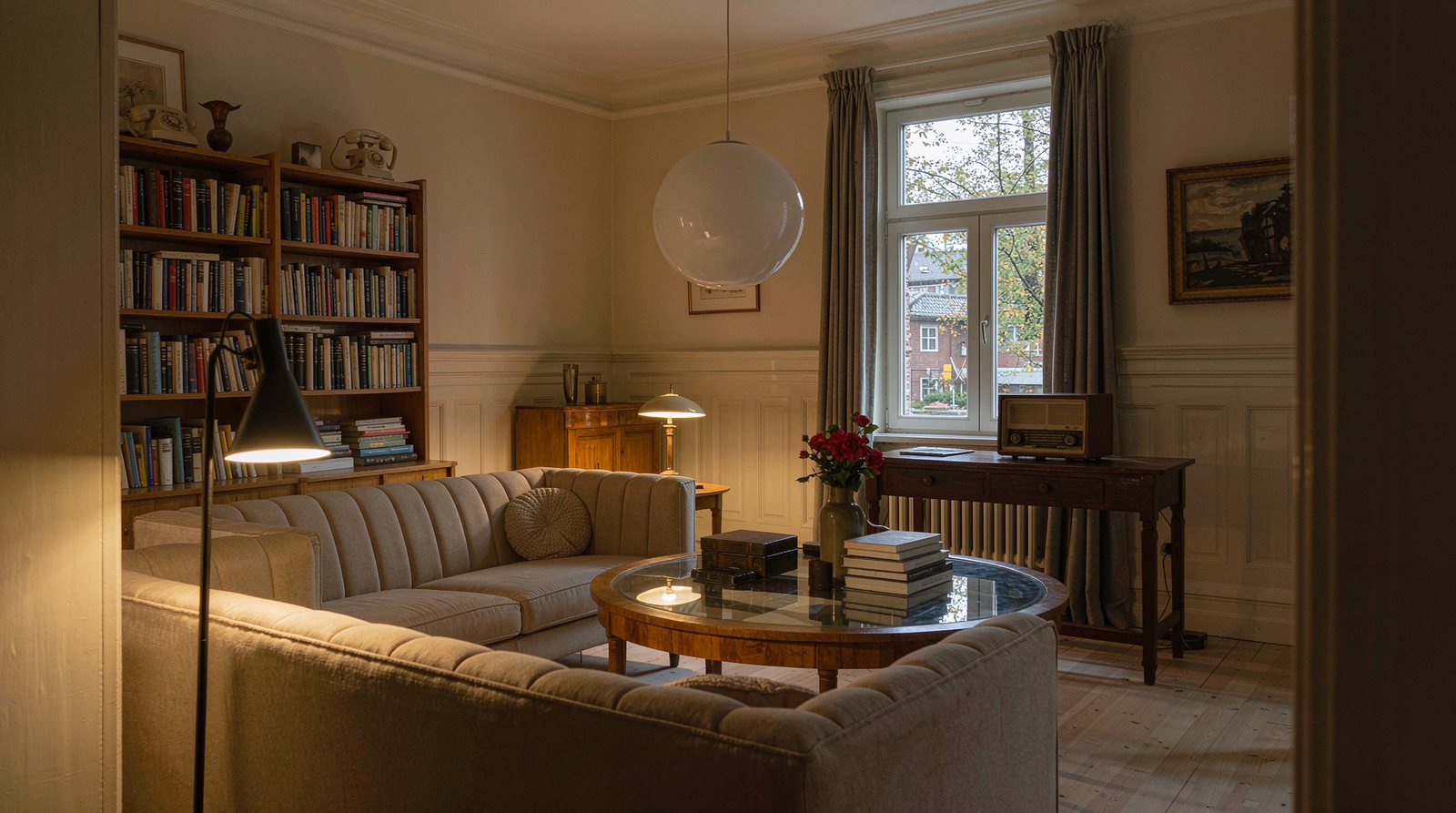
How to light a small room without rewiring
Most rental flats have one ceiling light, and one ceiling light makes a room look like a waiting room. The fix is not to touch the wiring, which you cannot do and should not try. The fix is to add light at different heights until the room stops being lit from a single point in the middle.
Three lamps in the right places will do more than any fitting you could buy, and none of them involve a junction box.
Why one ceiling light looks bad
A single overhead light throws light straight down. The ceiling stays bright, the walls stay dim, and everything in the room is lit from above, which flattens it and puts shadows under the eyes of anyone sitting down.
Adding light lower down and to the side changes what the room looks like without changing how much total light there is. The ceiling gets dark, the walls get light, and the space between things becomes visible. That is what makes a room read as larger, and it costs two lamps.
The three lamp positions that matter
- A floor lamp in a corner or just behind the sofa. This is the single most useful addition in almost any living room, because it puts light at head height where nobody usually has any.
- A table lamp on a side table or a shelf. Lower again, and close to where people actually sit.
- A lamp on a wall, if the landlord allows the fitting. A plug-in wall light is the exception: it uses the existing socket and needs nothing drilled.
Two of these are enough. Three lamps at the same brightness is worse than one, because you have made the problem brighter rather than different.
Choosing bulbs that actually change the room
The bulb matters more than the lamp. Most people leave whatever came in the fitting, which is usually a cool white bulb and reads as harsh and clinical against warm wood floors and cream walls.
Use a warm white, around 2700 to 3000 kelvin. The difference is large. Cool white at 4000 kelvin makes a room look like a shop, and it flatters nothing, particularly not warm wood, brass or linen.
Brightness matters too. In a living room, somewhere around 800 lumens for a floor lamp and 400 to 500 for a table lamp is a sensible starting point. Going brighter rarely helps and makes a small room feel cramped in the evening.
Making a small room work
In a small room, the lamps have to earn their footprint, which is a literal constraint rather than a figure of speech. A floor lamp with a base wider than a foot will not fit beside anything. Look for a slim base, or a tripod that tucks under furniture.
Shadows do a lot of the work here too. A lamp placed to cast light up a wall makes that wall look further away, which is the cheapest way to make a small room read as bigger. A lamp aimed only down at the floor does the opposite, because the eye registers the dark ceiling as low.
One more trick that costs nothing: switch off the ceiling light when the lamps are on. Most people leave both going, which defeats the whole exercise. The room looks completely different with one source than with two.
None of this touches a wall or a wire, and all of it comes back off at the end of the tenancy. The deposit guide covers what to do about fittings, and the small bedroom guide covers the same problem in a room with a bed in it.