
Peel and stick wallpaper in a rental: what actually lasts
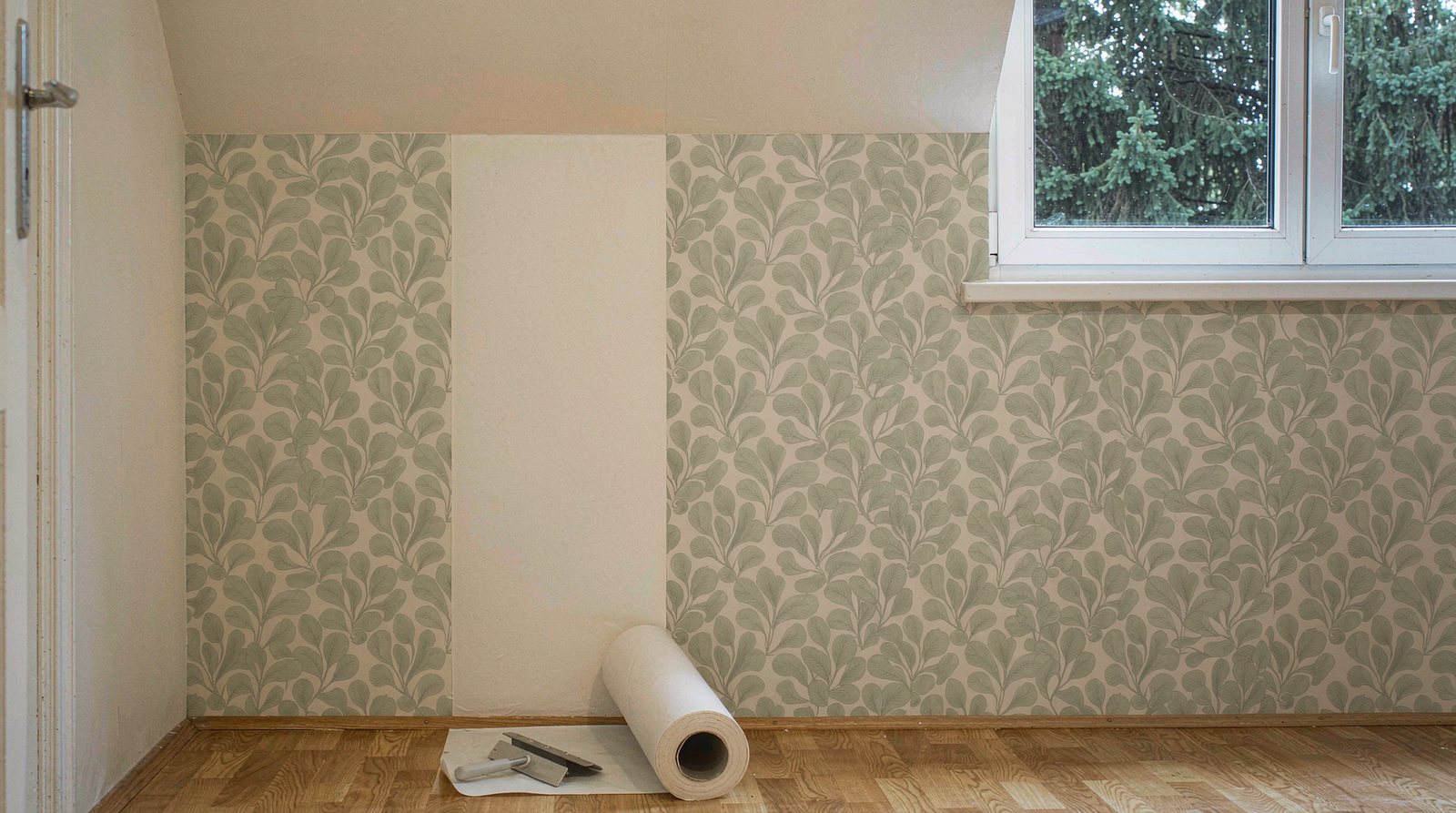
Peel and stick wallpaper is sold as the renter’s answer to a bare wall, and for a hallway or a bedroom it genuinely works. In a bathroom it usually does not, and the failure tends to show up as damage rather than as the paper simply falling off.
That difference comes down to moisture and time, so it is worth understanding before you buy a roll rather than after.
How it actually fails
The adhesive underneath peel and stick paper is a pressure sensitive glue. It bonds as you press the paper down and it stays bonded until something stronger pushes it off. In a dry room that something is time and heat, and paper left up for a year usually comes off with a light pull.
In a bathroom, steam softens the glue along the top edge first. The bond weakens unevenly, so the paper sags from the top while still stuck at the bottom. When that finally lets go, it does so unevenly, and the sections that have been softening longest are the ones that take paint with them.
This is why the complaints about peel and stick are so specific. It is not that the product does not work. It is that it was used somewhere it was never going to survive, and the wall paid for it.
Where it holds up well
A bedroom wall, a hallway, a living room, and a rented kitchen that does not steam. Dry rooms where the wall is painted masonry rather than plasterboard. In those conditions it is a genuinely good solution and costs a fraction of painting.
It is also the best way to test a bold colour you are nervous about. Paint a sample board or use a large peel and stick sheet on the wall you are considering, then look at it in the morning, at midday, and with the lamps on at night. Light changes everything and a sample board in one room tells you almost nothing.
Preparation is most of the result
Every failure we can describe traces back to the wall not being ready. Wash it, fill the holes, and let the filler dry completely. Sand it flat and wipe off the dust with a damp cloth. Fillers that have not cured will stick to the paper and lift off with it.
- Wash with warm soapy water to remove any dust, grease or flaking paint.
- Fill every nail hole and dent, then sand flush. Obvious defects show through more than you expect.
- Wipe with a damp cloth and leave the wall to dry fully, ideally overnight.
- Peel a corner of the sheet and wait a day before papering the rest, so you find a problem cheaply.
One extra note that saves real money. If your wall is currently painted, or covered in old peel and stick, the new paper will bond to that layer rather than to the wall. Removal then takes the layer underneath with it. Test a corner before you commit, because once you have a whole room of paper bonded to wallpaper, removing both is a job.
Humid rooms have better options
If the problem is a bathroom or a shower room, paper is the wrong answer. A freestanding panel, a tiled splashback you can remove with a suction tool, or simply a good shelf and a mirror will solve the problem without touching the wall at all.
Peel and stick is worth it in the dry rooms and worth avoiding in the wet ones. Get that right and it does exactly what it promises. The no-drill guide covers the lighter-weight ways to change a wall, and the deposit guide explains why adhesive shows up on deduction lists at all.